
 English
Views: 69 Author: Site Editor Publish Time: 2026-10-16 Origin: Site
Application of Disc Springs in the Nuclear Chemical and Nuclear Power Industries
A disc spring (also known as a disc spring or conical spring washer) is an elastic component with a conical disc shape. Leveraging its unique advantages—compact size, high load capacity, and customizable characteristic curves—it provides stable elastic compensation within limited axial space, counteracting preload loss caused by vibration, temperature fluctuations, and material relaxation. In the fields of nuclear chemical and nuclear power engineering—where safety and reliability requirements are exceptionally stringent—a disc spring may appear "unremarkable," yet it is deployed in critical components such as reactor pressure vessels, control rod drive mechanisms, nuclear-grade valves, and pipeline supports. In these applications, the disc spring fulfills vital roles: ensuring connection sealing, maintaining preload, and compensating for thermal deformation, thereby serving as an "invisible guardian" for the safe and stable operation of nuclear facilities. Jiangsu Sunzo Spring Elasticity Technology Co., Ltd. (hereinafter referred to as "Sunzo"), a mixed-ownership enterprise co-established with participation from China National Nuclear Corporation (CNNC), has dedicated itself to the research, development, and manufacturing of high-end elastic components—including disc springs, wavy springs, and helical springs. The company has also actively participated in the formulation of international ISO standards for disc springs as well as numerous national standards, providing comprehensive support—from standardized products to customized solutions—for nuclear power and nuclear chemical equipment.

Nuclear power and nuclear chemical equipment operate for extended periods in extreme environments characterized by high temperature, high pressure, severe corrosion, and radiation exposure. Taking the primary circuit of a pressurized water reactor (PWR) as an example, the coolant temperature typically exceeds 300 °C, the pressure exceeds approximately 15 MPa, and the medium consists of boron-containing high-temperature, high-pressure water, which exhibits strong corrosive properties. The service life of such equipment can span 40–60 years, during which it must withstand repeated thermal cycles induced by reactor start-up and shutdown operations, vibrations caused by coolant flow, and seismic loads. Under such operating conditions, conventional flat washers and spring washers are often unable to maintain the required preload for bolted connections over extended periods. Temperature fluctuations lead to differential thermal expansion and contraction between the bolts and the flanges; materials undergo stress relaxation and creep at high temperatures; and vibrations can cause threaded connections to loosen. These effects can ultimately result in leakage at sealing interfaces or even failure of the connections. Should such failures occur at the interface with radioactive media, the consequences would be extremely severe; consequently, stringent requirements are imposed on the reliability of fastening and preload components.
Disc springs, owing to their steep and designable elastic characteristics, are ideally suited to address this challenge: by appropriately shaping the load–displacement curve, they can maintain sufficient residual preload even after bolt tightening, thereby continuously compensating for thermal expansion, relaxation, and settlement. This enables them to sustain the reliability of connections and sealing over extended periods under high temperature, high pressure, and alternating loads. Consequently, disc springs have become the preferred choice for critical preloading and compensation fastening components in nuclear facilities.
The fastening and support conditions in nuclear power plants are complex; disc springs are primarily deployed at critical locations within the nuclear island (including the primary circuit, secondary circuit, and containment-related systems), specifically including:
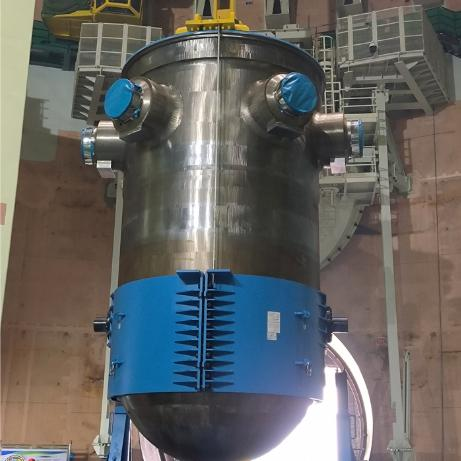
Main bolt connections of the reactor pressure vessel: The pressure vessel flange and the top cover are secured and sealed by dozens of main bolts; disc springs are employed to compensate for the loss of preload of the bolts under thermal cycling and creep conditions, thereby ensuring the reliable sealing performance of the metal sealing rings.
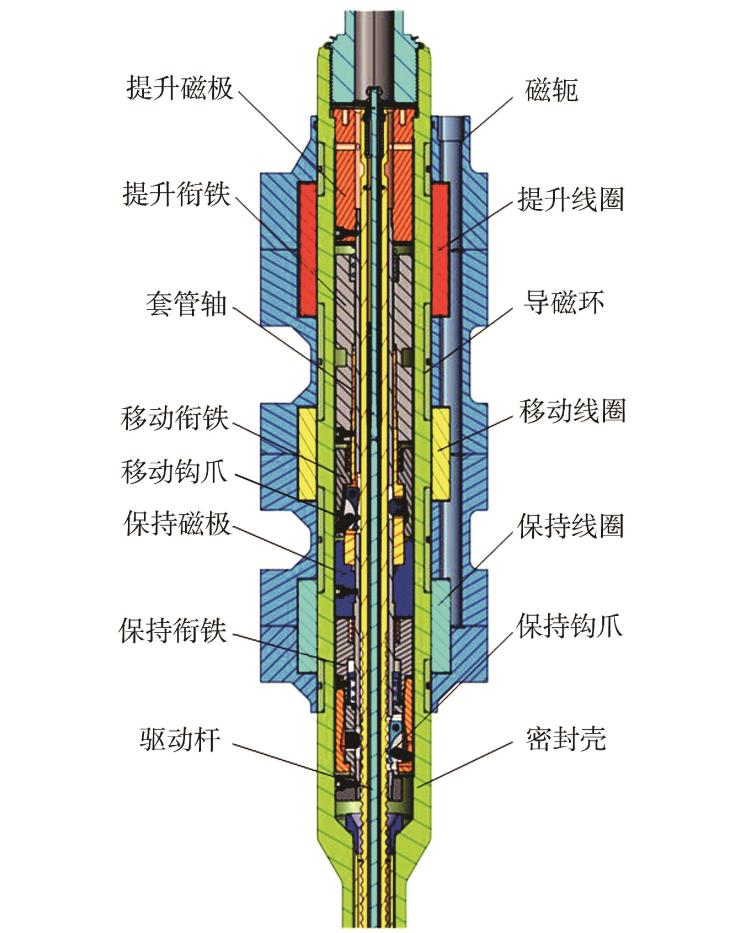
Control Rod Drive Mechanism (CRDM): As a critical component for regulating core reactivity, this mechanism employs high-temperature and radiation-resistant disc springs in its hook claws, sealing housings, and other critical parts, thereby ensuring reliable operation and intact sealing integrity. The drive mechanism of China's Hualong One ML-B reactor has successfully passed both a 15-million-cycle hot-standby life test and a 0.3g vibration test.
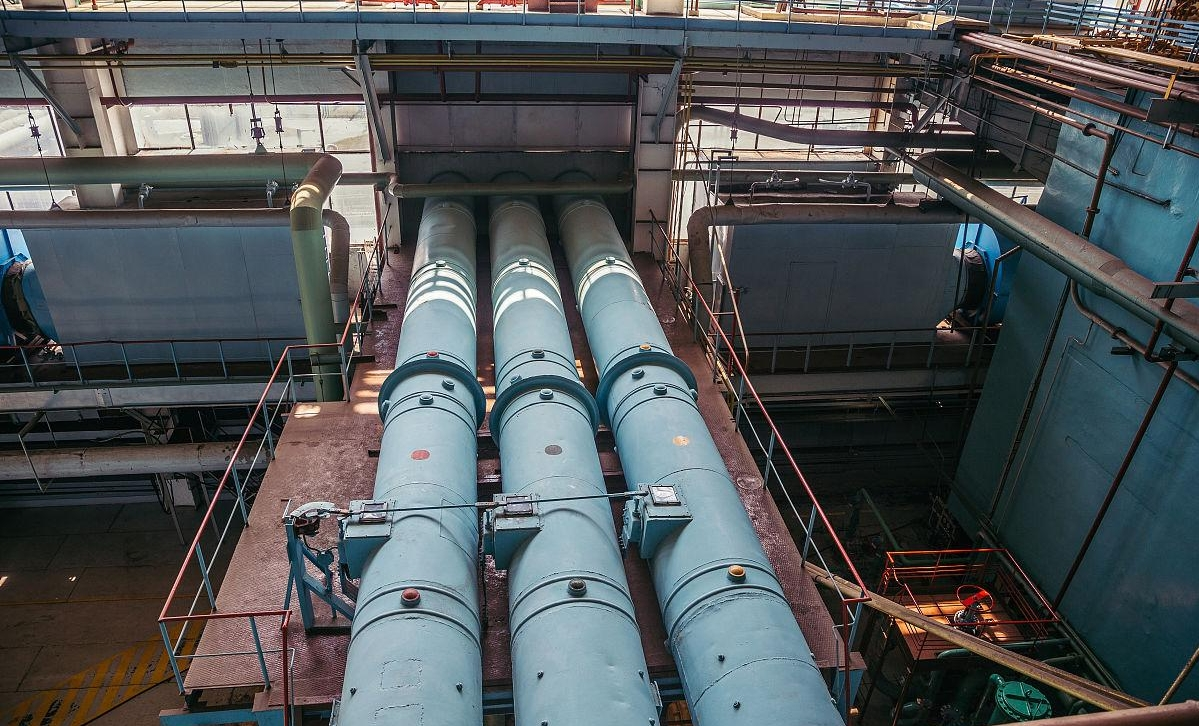
Primary circuit main equipment—including steam generators, pressure stabilizers, and the main pump—utilizes flange connections and internal structures to provide durable elastic compensation under high-temperature, high-pressure, borated water conditions, thereby resisting fatigue and creep.
Reactor internals and equipment supports: Provide positioning and pre-tensioning for reactor internals such as lifting baskets and upper core plates; also provide spring-mounted swing supports and vibration isolators for nuclear safety-rated equipment, ensuring seismic and vibrational resistance performance.
Containment penetrator and piping system: The sealing surfaces of the penetrator and the nuclear-grade piping spring supports and hangers utilize disc springs to compensate for thermal expansion/contraction and absorb vibrations, thereby preventing excessive stress in the piping system.
Conventional island and power plant auxiliary systems: For the bolted connections of equipment such as steam turbines, pumps, valves, and generators, as well as for pipeline supports, disc springs are also widely employed to enhance connection reliability.
Nuclear chemical engineering focuses on the nuclear fuel cycle and the handling of radioactive materials. Its key characteristics include media exhibiting high radioactivity and strong corrosivity, stringent requirements for sealing and leak prevention, and extended equipment maintenance intervals. Disc springs play a critical role in the following stages:
Nuclear fuel cycle facilities (uranium conversion, uranium enrichment, fuel element fabrication): Flange connections of process equipment and piping, as well as valve preload, rely on disc springs to ensure that sealing integrity is maintained under vibration and thermal cycling conditions.
Spent fuel reprocessing and radioactive liquid treatment facilities: Designed to handle highly corrosive nitric acid-based feed streams, these facilities feature equipment and piping operating in a high-radiation environment; the use of disc springs in conjunction with corrosion-resistant sealing assemblies ensures long-term sealing performance of flanges and valves, thereby reducing the risk of leakage.
Shielded containers, hot cells, and glove boxes—as critical components of radioactive operating facilities—frequently employ disc springs for bolt fastening and sealing compensation at operational ports, observation windows, and transfer channels, thereby preventing the leakage of radioactive aerosols.
For nuclear-grade valves—globe valves, control valves, and safety valves—disc springs are commonly employed at the valve cover-to-valve-body interface and the valve stem sealing interface to provide continuous pre-tightening sealing force, thereby compensating for packing wear and thermal deformation.
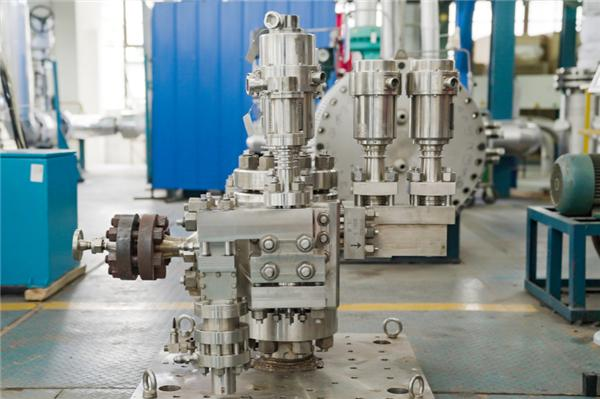
Process piping spring supports and hangers and equipment supports: Provide thermal expansion compensation and reliable support for process pipelines exposed to high temperatures and corrosive media.
At the standard level, the design calculations and technical specifications for disc springs comply with GB/T 1972.1—2023 "Disc Springs — Part 1: Calculation" and GB/T 1972.2—2023 "Disc Springs — Part 2: Technical Conditions," respectively. When used in pressure-bearing equipment and safety-class components of nuclear islands, their design, manufacture, materials, and inspection must also satisfy the requirements of nuclear power industry codes such as RCC-M (Rules for Design and Construction of Mechanical Equipment for Pressurized Water Reactor Nuclear Islands) or ASME, and be subject to management in accordance with nuclear safety classification standards. Sunzo's products are rigorously developed and manufactured in strict compliance with the aforementioned standards and codes, thereby possessing comprehensive technical support for nuclear-grade disc springs.
In material selection, it is essential to simultaneously consider temperature resistance, corrosion resistance, radiation resistance, and creep resistance. For conventional high-temperature operating conditions in relatively clean environments, spring steels such as 50CrVA or 60Si2MnA may be selected; for environments with high corrosivity and boron-containing water, corrosion-resistant stainless steels should be employed; when high temperature (e.g., approximately above 300 °C in the primary circuit) and severe corrosion coexist, nickel-based superalloys—such as Inconel 718 (corresponding to GH4169 under Chinese national standards) or Inconel X-750—should be selected, as these alloys exhibit outstanding long-term creep resistance and stress relaxation resistance during service. Sunzo has established a graded material system in its product manufacturing, ranging from 1074,51CrV4, 60Si2Mn, 65Mn to SUS302/304/316,17-7PH, and Inconel 718/X-750, and can integrate surface treatment processes including phosphating, DAKRO, bluing, polishing, Jiumeite treatment, passivation, and Teflon coating. This approach fulfills the complete material selection requirements from conventional operating conditions to high-temperature, high-corrosion conditions in the primary circuit. During material selection, particular attention should be paid to verifying the elastic modulus and stress relaxation characteristics at the maximum operating temperature, stress corrosion susceptibility in the corrosive medium, the impact of radiation on material properties, fatigue life, and the effects of surface treatment on the friction coefficient and corrosion resistance.
Nuclear-grade disc springs are characterized by their compact size and high load capacity; therefore, quality control is implemented across the entire production lifecycle. Regarding raw materials and traceability, rigorous inspections are conducted on material composition and mechanical properties, coupled with individual piece numbering and full-process quality traceability, to comply with nuclear safety requirements. For dimensional and performance inspections, critical parameters—including inner and outer diameters, thickness, and free height—are comprehensively inspected; additionally, load-deformation characteristic tests are performed on loading machines to verify that the springs' performance aligns with the design characteristic curves. In mechanical and performance testing, hardness, permanent deformation, elasticity, fatigue life, and creep relaxation tests are carried out to assess the long-term performance of the springs throughout the design service life of nuclear power plants. Regarding non-destructive testing (NDT) and surface treatment, NDT procedures are executed in accordance with relevant standards, while surface treatments and coatings must satisfy requirements for corrosion resistance and low friction. Sunzo has established a modern testing center equipped with full-process testing capabilities—including chemical composition analysis, heat treatment and metallographic examination, load-value characterization, fatigue testing, creep testing, salt spray testing, and NDT—thereby meeting the quality control demands for nuclear-grade disc springs from raw materials to finished products.
Table 1: Typical Applications of Disc Springs in the Nuclear Chemical and Nuclear Power Industries
domain | Typical application sites | key role |
Nuclear Power · Nuclear Island | Reactor pressure vessel main bolts, control rod drive mechanisms, steam generator/pressure stabilizer/primary pump flanges, reactor internals, containment penetrations | Maintain preloading and sealing under high temperature and high pressure conditions, compensate for thermal deformation and relaxation, and ensure nuclear safety. |
Nuclear Power · Conventional Island | Steam turbines, pumps, valves, piping, and spring supports and hangers | Resists vibration and thermal cycling to extend the service life of the connection. |
Nuclear Chemical Engineering | Flanges and valves of spent fuel reprocessing/waste liquid treatment piping, shielding containers/thermal chambers/glove boxes, and nuclear-grade valve pre-tightening | Long-lasting sealing performance in highly corrosive and highly radioactive environments, preventing radioactive leakage. |
nuclear fuel cycle | Uranium conversion, enrichment, and fuel element manufacturing equipment | Ensure reliable connectivity of the process system to reduce the frequency of maintenance. |
Sunzo, a mixed-ownership enterprise co-established with a stake from China National Nuclear Corporation (CNNC), specializes in the research, development, and manufacturing of high-end elastic components—including disc springs, wavy springs, helical springs, and disc washers. The company has secured over 70 patents in total, has actively participated in the development of international ISO standards for disc springs as well as numerous national standards, and ensures its product performance meets the benchmarks of world-class brands. Consequently, Sunzo has become a core supplier within CNNC's ecosystem, as well as for nuclear power and nuclear chemical equipment projects. Based on its product portfolio, its applications in critical components of the nuclear industry can be categorized as follows.
(1) Reactor pressure vessel main bolt pre-tension compensation — DIN 2093 standard disc spring.
The DIN 2093 compliant disc springs serve as the core component for preload application and sealing compensation. Sunzo offers this series in a comprehensive range of specifications (001 series, with outer diameters from 6 to 100 mm, encompassing over 200 variants), utilizing spring steels such as 1074,51CrV4, 60Si2Mn, and 65Mn, as well as corrosion-resistant and high-temperature alloys including SUS302/304/316,17-7PH, Inconel 718, and Inconel X-750. Surface treatments available include phosphating, DAKRO, bluing, polishing, Jumeite, passivation, and Teflon. In the main bolt connections of reactor pressure vessels, these disc springs employ a combined approach of "stacked force enhancement" and "paired stroke extension," enabling them to meet the stringent requirements for large preload loads and precise residual preload forces across dozens of main bolts, while continuously compensating for preload loss induced by thermal cycling and creep. For the high-temperature and highly corrosive operating conditions of the primary circuit, Inconel 718/X-750 is selected; for non-pressure-bearing components, spring steels such as 51CrV4 or 60Si2Mn are employed, thereby achieving optimal performance-to-cost balance.
(2) Bearing preloading for the main pump and primary circuit rotating equipment — disc springs for bearing preloading.
Sunzo Bearing's pre-tensioning disc springs are available in two series: "slit-free" and "slotted," with model numbers covering commonly used bearing specifications such as 6000–6011,6200–6210, and 6300–6308. When used in multi-leaf parallel configurations, these springs ensure uniform load distribution and identical displacement, while allowing the load multiplier to increase proportionally. They are employed for pre-tensioning bearings in single-loop rotating equipment—including main pumps, priming pumps, and equipment cooling pumps—thereby stably maintaining bearing clearance, compensating for operational wear and thermal expansion/contraction, and ensuring long-term reliable operation of the pump assemblies.
(3) Nuclear-grade valve sealing and bolt anti-loosening — disc springs for valves and DIN 6796 disc spring washers.
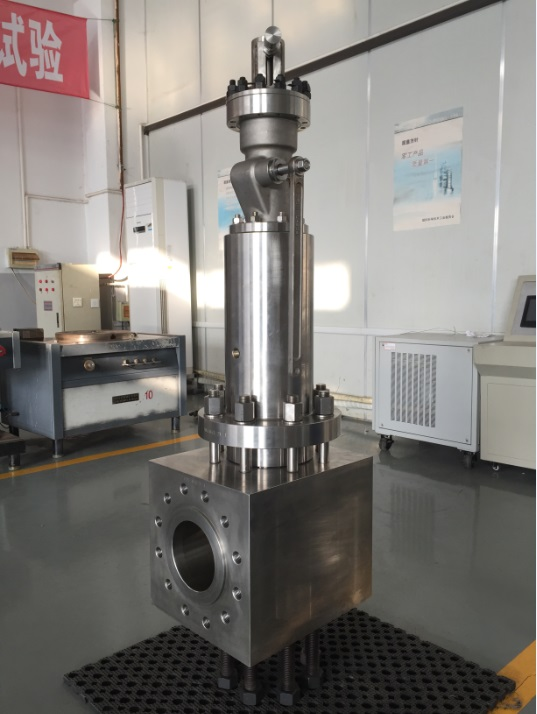
For nuclear-grade valves (globe valves, control valves, and safety valves), Sunzo valves employ disc springs for the valve cover-to-valve body and valve stem sealing interfaces to provide continuous pre-tensioning sealing force, compensating for packing wear and thermal deformation. The mating components utilize DIN 6796 disc spring washers, which maintain a clamping force retention rate of approximately 3/4—over 1.5 times that of conventional solutions—with a hardness of approximately 400–500 HV. These washers are compatible with high-strength bolts of grade 8.8 or higher, effectively compensating for creep, temperature fluctuations, and sealing compression degradation. For applications requiring higher torque and enhanced anti-loosening performance, DIN 9250 toothed disc anti-loosening washers, double-groove disc springs, and high-torque or ultra-high-torque disc springs may also be selected.
(4) Reactor internals, containment penetrations, and piping supports — custom disc springs, spring assemblies, and damping devices.
Structural components within the reactor vessel, such as the internal suspended basket and the upper core plate, require precise positioning and pre-tensioning. Sunzo provides customized disc springs and forged disc springs, with materials and manufacturing processes tailored to meet nuclear safety-grade component requirements. For containment penetrations, sealing surfaces, and nuclear-grade piping spring supports and hangers, disc springs are employed to compensate for thermal expansion/contraction and absorb vibrations. The spring assemblies, in conjunction with damping devices, provide fixed oscillation supports and vibration isolation for nuclear safety-grade equipment, thereby ensuring superior seismic and vibrational performance.
(5) Nuclear chemical processing: severe corrosion and high radiation operating conditions — corrosion-resistant disc springs and wavy springs.
Nuclear spent fuel reprocessing and radioactive liquid treatment facilities operate in highly corrosive nitric acid environments and under intense radiation conditions. In such applications, Sunzo employs corrosion-resistant materials—such as SUS316,17-7PH, and Inconel—for its disc springs, which, in combination with corrosion-resistant sealing structures, ensure long-term sealing performance between flanges and valves, thereby reducing leakage risks. Additionally, corrosion-resistant disc springs can be utilized for bolt fastening and sealing compensation in shielding containers, hot cells, and glove boxes to prevent the escape of radioactive aerosols. For nuclear instrumentation, precision mechanisms, and valve seals in confined spaces, multi-layer wavy springs offer an axial height of only 1/3 to 1/2 that of helical springs, enabling space savings of approximately 50%. These springs provide precise load control ranging from 10 N to 20,000 N, and their operating temperature can exceed 600 °C depending on the material selected, making them an optimal choice for compact design solutions.
(6) Nuclear Power Valves and Auxiliary Mechanisms — Precision Coiled Springs and Extended Product Line.
Precision helical springs (compression, tension, and torsion) are widely used in nuclear power plant valves, spring supports and hangers, and instrumentation mechanisms, providing reset, damping, and support functions. To meet specialized requirements—such as lightweight design, low friction, high-temperature resistance, and long-stroke damping—Sunzo also offers extended product lines, including carbon fiber disc springs, ceramic springs, and annular springs, thereby providing a broader range of solutions to meet the elastic performance needs of the nuclear industry.
Table 2: Typical Application Mapping of Jiangsu Sunzo Products in the Nuclear Industry
Sunzo Products | Applications in the nuclear industry | Applicable Materials and Operating Conditions | core value |
DIN 2093 standard disc spring | Main bolts of the reactor pressure vessel, reactor internals, and containment penetrators | 1074、51CrV4、60Si2Mn、65Mn;Inconel 718/X-750、SUS316、17-7PH | Compensates for thermal deformation and creep under pre-tensioning to ensure reliable sealing performance. |
Disc spring for bearing preload (grooveless/grooved) | Bearings for the main pump, the top charge pump, the equipment cooling pump, and other related pumps | Corrosion-resistant stainless steel / high-temperature alloy | Stabilize bearing preload, compensate for clearance, and account for thermal expansion |
Disc spring for valves | Nuclear-grade globe valves, control valves, and safety valves | Corrosion-resistant stainless steel / high-temperature alloy | Continuous pre-tensioning of the seal to compensate for packing wear |
DIN 6796 Disc Spring Washer | Nuclear-grade bolted joint pair | Hardness: approximately 400–500 HV | Active anti-loosening ensures a clamping force retention rate of approximately 3/4. |
DIN 9250 Tooth Surface Anti-Loosening Washer / Double-Slot Type / High-Torque Disc Spring | High-torque, vibration-resistant anti-loosening connection | Spring steel/Alloy steel | Higher anti-loosening torque, vibration-resistant and anti-loosening performance |
Multi-layered wavy spring | Nuclear instruments, precision mechanisms, and valve seals in confined spaces | Spring steel – 40–120 °C / Stainless steel – 60–250 °C / High-temperature alloy – up to 600 °C | Saves approximately 50% of space, with precisely adjustable load capacity |
Precision spiral spring | Nuclear power plant valves, spring-mounted supports and hangers, instrumentation mechanisms | 65Mn/60Si2MnA / Stainless steel / Nickel-based alloy | Repositioning, cushioning, support |
Custom-made disc springs / Forged disc springs / Carbon fiber disc springs / Ceramic springs / Ring springs / Spring assemblies / Damping devices | In-pile positioning, vibration isolation supports, lightweight design, and high-temperature buffering | Customized according to operating conditions | Meets requirements for customization, lightweight design, and seismic and vibration resistance. |
Disc springs, leveraging their unique advantages of "compact size and high load capacity," have become critical foundational components in ensuring the reliability of connections and seals within the nuclear chemical and nuclear power industries. With the large-scale deployment of third-generation nuclear power reactors—such as Hualong One—in China, coupled with the high-quality development of the nuclear fuel cycle industry, the requirements for nuclear-grade disc springs regarding materials, standards, manufacturing, and testing continue to rise. Leveraging its industrial background—including its equity stake in China National Nuclear Corporation (CNNC)—as well as its end-to-end manufacturing and testing capabilities, Sunzo will continue to provide the nuclear industry with high-reliability, traceable elastic solutions. Only by thoroughly mastering relevant standards, rigorously controlling material selection, precisely regulating manufacturing processes, and ensuring full-process traceability can this "invisible guardian" operate reliably over extended periods under extreme operating conditions, thereby laying a solid foundation for the safe and stable operation of nuclear facilities.


