
 English
 Views: 66 Author: Site Editor Publish Time: 2025-12-26 Origin: Site
Exploring the Performance Code Behind Disc Spring Steel
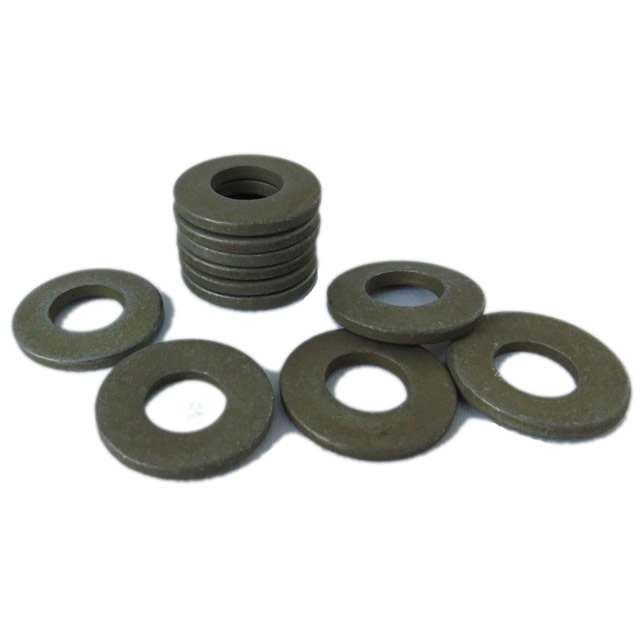
In the microscopic realm of mechanical engineering, disc springs are components that appear simple yet bear immense responsibility. Their mission is to deliver reliable elasticity within confined spaces, endure countless compressions and rebounds, and maintain their "memory" under prolonged stress—without creep or relaxation. The core of this performance stems from the delicate balance in steel composition. Today, we decode the performance secrets of spring steel through two common disc spring materials: 50CrVA and 60Si2MnA.


I. Genetic Variations in Materials
The chemical composition of these two steel types, akin to their genetic code, defines their inherent strengths and limitations.
As the name suggests, 50CrVA is primarily composed of chromium (Cr) and vanadium (V), with a moderate amount of carbon (C) as an additive. Its carbon content is moderate (0.46-0.54%), providing room for optimization in subsequent heat treatment. Although the vanadium content is minimal (0.1-0.2%), it plays a crucial role at the microscopic level.
60Si2MnA follows a distinct path—the high-silicon route. Its silicon content reaches 1.6-2.0%, which is the origin of the 'Si2' in its name. The carbon content is correspondingly increased (0.56-0.64%), with manganese (Mn) as an auxiliary element. Historically, this combination has proven to be an exceptionally cost-effective choice, though it also harbors inherent limitations.
II. The Game of Elements in the Microscopic World
Each element plays a unique role in the microscopic world of steel:
Carbon serves as the skeletal element in spring steel, forming a carbide network with other elements to provide fundamental strength. However, carbon is a double-edged sword—excessive content increases brittleness and reduces toughness.
Silicon is a master of solid solution strengthening. It embeds itself into iron's lattice, causing lattice distortion that enhances the material's resistance to deformation. Another unique property of silicon is its ability to suppress carbide coarseening during tempering, which directly affects a spring's "memory" capability. However, silicon's active nature also poses challenges: it tends to cause surface decarburization in steel and may induce graphitization under certain conditions—akin to "osteoporosis" in steel.
Manganese is a hardenability promoter, which helps the steel to obtain uniform properties in heat treatment. But the side effect of manganese is to increase the heat sensitivity of the material, and may lead to temper brittleness.
Chromium is a versatile element. It significantly enhances hardenability, enabling steels to achieve optimal microstructures under milder cooling conditions. It improves temper stability, allowing springs to operate at higher temperatures without performance loss. Additionally, it mitigates decarburization tendency, safeguarding the integrity of the steel's "skin."
Vanadium, despite its minimal content, serves as a performance multiplier. The carbides it forms are fine and hard, resembling countless microscopic anchor points embedded in the grain boundaries, which inhibit grain growth under thermal or mechanical stress. This grain refinement effect is pivotal for enhancing toughness and fatigue life.
III. Fatigue Test Reveals the Truth of Performance
The destructive fatigue test is a test that pushes the material to its limit. The comparative test results of Sunzo Company clearly show that the disc spring made of 50CrVA has a longer service life, less creep, and less relaxation.
This result seems simple, but it is the collision of two material design philosophies.
The 60Si2MnA steel follows a "high solid solution strengthening" approach. Its strong silicon solubility ensures excellent performance in static tests, with both initial strength and hardness being ideal. However, under repeated cyclic loading, its weaknesses gradually emerge: the high silicon content increases the tendency for decarburization, making the surface prone to micro-crack initiation; although graphitization risks are controlled, hidden dangers persist; most critically, the absence of tempering stability and grain refinement effects provided by chromium and vanadium makes it more susceptible to performance degradation during long-term service.
50CrVA adopts a more balanced design philosophy. Chromium provides excellent hardenability and tempering stability, ensuring uniform performance across the entire cross-section and maintaining properties over a wide temperature range. The addition of trace vanadium significantly enhances the material's toughness and fatigue resistance through grain refinement. This enables 50CrVA to exhibit superior damage resistance under dynamic loads, making crack initiation and propagation more challenging.
IV. Relaxation and Creep: The Test of Time
Relaxation and creep are performance degradation phenomena in springs under prolonged static loads. While 60Si2MnA relies on silicon to enhance relaxation resistance, this mechanism proves inadequate under high-temperature or long-term stress conditions. The improved temper stability from chromium and the stable carbide phase provided by vanadium make 50CrVA outperform in this regard. Its "memory" is more durable, maintaining preset loads even in harsh environments for extended periods.
V. The Art of Selection and Application
The superiority and inferiority of the material is never absolute, but closely related to the specific application needs.
For low-cost, ambient-temperature, static or low-cycle applications, 60Si2MnA remains a rational choice due to its cost advantage. Its mature technology and stable process are sufficient to meet many conventional requirements.
For applications requiring high performance, high reliability, and long service life—such as aerospace, precision instruments, and safety devices for heavy machinery—the advantages of 50CrVA become evident. Its comprehensive performance, particularly under dynamic loads, provides design engineers with greater safety margins and extended maintenance cycles.
VI. Enlightenment and Prospects
The comparison of the two materials reveals that excellent spring steel design is not the extreme performance of a single element, but the synergistic balance of multiple elements. Trace yet critical elements (such as vanadium) often achieve maximum benefits with minimal usage.
Looking ahead, the family of spring steels will continue to expand with advancements in materials science. However, the comparative study of 50CrVA and 60Si2MnA remains a classic case study, reminding engineers that material selection should not only focus on the numbers in the chemical composition table but also understand the microscopic mechanisms and performance logic behind these numbers.
Every compression and rebound of the disc spring is a dialogue between material and mechanics. Selecting the right material ensures this dialogue can endure millions of times without losing its essential rhythm.


