
 English
 Views: 68 Author: Site Editor Publish Time: 2026-03-24 Origin: Site
Load and Operating Condition Loading-Core Determinants of Service Life and Failure Modes for Disc Spring
During actual service operation, the complex stress conditions experienced by disc springs (hereinafter referred to as "disc springs") and the external loads imposed under specific operating conditions collectively constitute the core environmental factors and direct triggers influencing their operational performance, service reliability, and ultimate failure. Key determinants include the precision of load-to-design matching, the impact and fatigue effects of dynamic loads, as well as the appropriateness of preloading settings and control of working stroke. These critical elements directly and profoundly determine the overall service life and failure modes of disc springs.
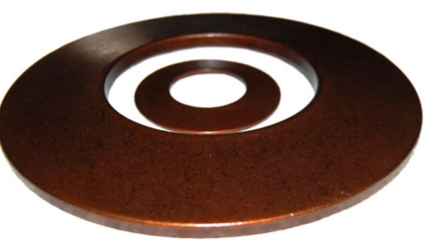
The working loads experienced by disc springs in practical engineering applications must be rigorously designed and controlled within their material allowable stress range, which constitutes the fundamental principle for ensuring safe service. Prolonged operation under overload conditions can cause localized or overall stress in disc spring materials to exceed their elastic limits, leading to irreversible plastic deformation. This cumulative plastic deformation not only reduces spring resilience and load-bearing capacity but also significantly accelerates micro-scale fatigue damage processes within the material. For instance, in a real-world mechanical sealing system case, the accompanying disc springs suffered from inadequate design margins or operational variations that subjected them to sustained loads exceeding expected values. This ultimately resulted in pronounced elastic relaxation, substantial reduction of preload force, and direct failure of the entire sealing interface coupled with fluid leakage.
Most disc springs are designed for dynamic operating conditions rather than static environments, requiring continuous exposure to various dynamic loads. These primarily fall into two categories: First, instantaneous high-energy impact loads characterized by rapid onset and peak intensity, which can trigger micro-crack initiation and rapid propagation in stress-concentration zones, potentially leading to brittle fracture without significant plastic deformation. Second, cyclic or stochastic alternating fatigue loads. Although individual load amplitudes may appear modest, repeated stress cycles gradually accumulate fatigue damage within materials. After a certain number of stress cycles, fatigue cracks tend to initiate preferentially at defects or high-stress areas, progressively expanding under sustained loading until fatigue fracture failure occurs.
When the operating frequency of external excitation approaches or coincides with the natural frequency of a disc spring assembly, dangerous resonance phenomena may occur. Resonance can dramatically amplify dynamic stress amplitudes on the spring, causing fracture within extremely short durations well below its designed service life. For instance, a disc spring used in a power equipment vibration control system experienced resonance due to excessive frequency proximity between operational excitation and its natural frequency, resulting in rapid fatigue fracture failure. To mitigate such risks, fundamental solutions involve optimizing geometric parameters (e.g., thickness, taper angle), assembly configurations, or system damping characteristics to alter the spring's natural frequency. This effectively shifts its resonance range away from primary operational excitation frequencies, thereby substantially reducing or eliminating destructive resonance impacts at their source.
If you require in-depth analysis of operational loads for specific application scenarios or need to select the most suitable and reliable disc spring products for your project, our professional technical team can provide comprehensive support. Please contact our Business and Engineering Services team through official channels for further assistance.


