
 English
 Views: 67 Author: Site Editor Publish Time: 2026-02-05 Origin: Site
Surface Engineering Technology:Comprehensive Analysis and Selection Guide of Common Treatment Process in Spring Manufacturing
Throughout their lifecycle, corrosion remains a critical threat to spring performance stability and service life. From chemical residues during manufacturing, environmental erosion during storage, to complex medium interactions during operation, each stage may cause irreversible damage. Leveraging years of manufacturing expertise and material science knowledge, Jiangsu Sunzo has systematically analyzed core spring surface treatment processes to help you develop scientifically sound protection solutions.
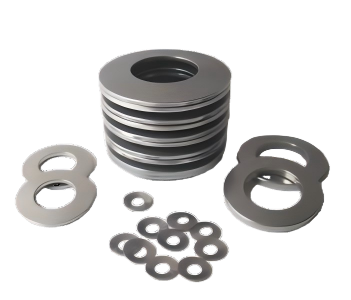
The failure of springs often originates from the surface. Corrosion not only affects the appearance but also alters the microstructure of the material, leading to:
Elastic Performance Attenuation:Corrosion Products and Stress Corrosion Cracks Directly Affect the Load Capacity and Fatigue Life of Spring
Dimensional accuracy drift: Local corrosion leads to cross-sectional inhomogeneity, affecting the consistency of influence values
Change of Frictional Characteristics: The Influence of Surface Condition on Frictional Behavior of Spring in Combination
Therefore, scientific surface treatment is not only for "anti-rust", but also for the systematic protection and optimization of spring performance.
The technology principle is to form a dense Fe3O4 oxide film on the surface by alkaline oxidation, the thickness of which is about 0.51.5μm.
Application scenarios: Cost-sensitive applications with relatively dry working environments (relative humidity <60%), short-term storage, or low corrosion risk, such as springs in certain indoor instruments and meters.
Three key practices: We strictly control oxidation temperature and solution composition to ensure uniform and dense film layer, and provide short-term rust-proof packaging recommendations.
Technology deepening: The generated phosphate crystalline film (manganese series, zinc series) not only physically isolates the corrosive medium, but also effectively adsorbs and stores lubricating oil through its porous structure, providing continuous lubrication in dynamic applications.
Application scenarios: Springs requiring good corrosion resistance while maintaining subsequent coating adhesion, or those operating in moderately corrosive environments with lubrication needs, such as automotive suspension springs and general-purpose mechanical disc springs.
Three key technologies are controlled: low hydrogen embrittlement phosphating process combined with strict dehydrogenation heat treatment, especially for high stress disc springs, to ensure protection and eliminate hydrogen embrittlement risk.
Technical advantages: The synergistic effect of zinc-aluminum lamellar structure and chromate passivation provides excellent sacrificial anode protection and barrier protection. Its hydrogen embrittlement-free property is particularly suitable for high-stress springs.
Application scenarios: High humidity, salt spray, chemical media, or harsh environments with temperature fluctuations below 300°C, such as marine platforms, chemical equipment, and springs around engines.
3. Application Note: We will optimize the coating thickness and sintering process according to the service stress level of the spring, and balance the protective effect and the influence on the spring stiffness.
Engineering value: The removal of surface micro-cracks, burrs and other stress concentration sources can increase the fatigue life of spring by 15% to 30%. Reducing surface roughness also helps improve sealing and cleanliness.
Application scenarios: Spring for precision instruments, medical devices, food machinery, etc. with high requirements for cleanliness, low friction or fatigue life, as well as high surface quality disc springs and corrugated springs.
The three-step process: We typically use polishing as a pretreatment for phosphating or Dacromet, or apply an ultra-thin functional coating post-polishing to achieve both performance enhancement and protection.
Technical characteristics: The coating is formed by mechanical energy at room temperature, and the mechanical properties of spring substrate are hardly affected. It is suitable for precision springs that have been heat-treated and are not suitable for heat shock.
Application scenarios: Springs that are extremely sensitive to hydrogen embrittlement or cannot withstand high-temperature treatment, as well as products with complex shapes where electroplating may create dead zones.
Three types of selection recommendations: usually as a supplement to other processes or as a solution to specific requirements.
The selection of surface treatment processes should not be based on a single criterion. We recommend establishing the following decision-making framework:
dimension of consideration | the key to the question | technogenic influence |
service condition | Corrosion medium, humidity, temperature, and presence of friction? | Determine the required corrosion resistance, temperature resistance and lubricity. |
performance requirement | Fatigue life, force value accuracy, and permissible dimensional variation? | The requirements of hydrogen embrittlement, coating stress and thickness uniformity are affected. |
Cost and Batch | Budget scope, production batch, and whether rapid turnover is required? | It affects the choice of process complexity, equipment investment and production rhythm. |
subsequent handling | Do you need to paint, assemble, or come into contact with other materials? | The requirements of coating adhesion, color, conductivity and contact compatibility are affected. |
Regulation and Environmental Protection | Does it comply with environmental regulations such as RoHS and REACH? | Restrict the use of processes containing specific substances such as chromium and nickel. |
At Jiangsu Sunzo, we regard surface treatment as a key value-added process in spring manufacturing.
Process database: We have established a process performance database based on a large number of experiments and customer feedback, which can predict the effect of different treatment schemes on the performance of specific springs.
Customized solution development: For extreme operating conditions (e.g., ultra-high temperatures, strong acids/alkalis, deep-sea pressures), we can develop composite coatings or tailor process parameters.
The whole process quality control: from the pretreatment cleanliness, to the parameter fluctuation in the process, to the thickness and adhesion test of the membrane after the treatment, we implement the whole process monitoring.
Failure analysis and improvement: If corrosion or other issues occur with the spring during use, we can provide a failure analysis of the surface coating and improve the process accordingly.
Proper surface treatment serves as the bridge between premium spring materials and long-term reliable service. With our professional surface engineering expertise, we provide end-to-end protection for your spring products, ensuring consistent performance under complex operating conditions.


