
 English
Views: 0 Author: Site Editor Publish Time: 2026-10-23 Origin: Site
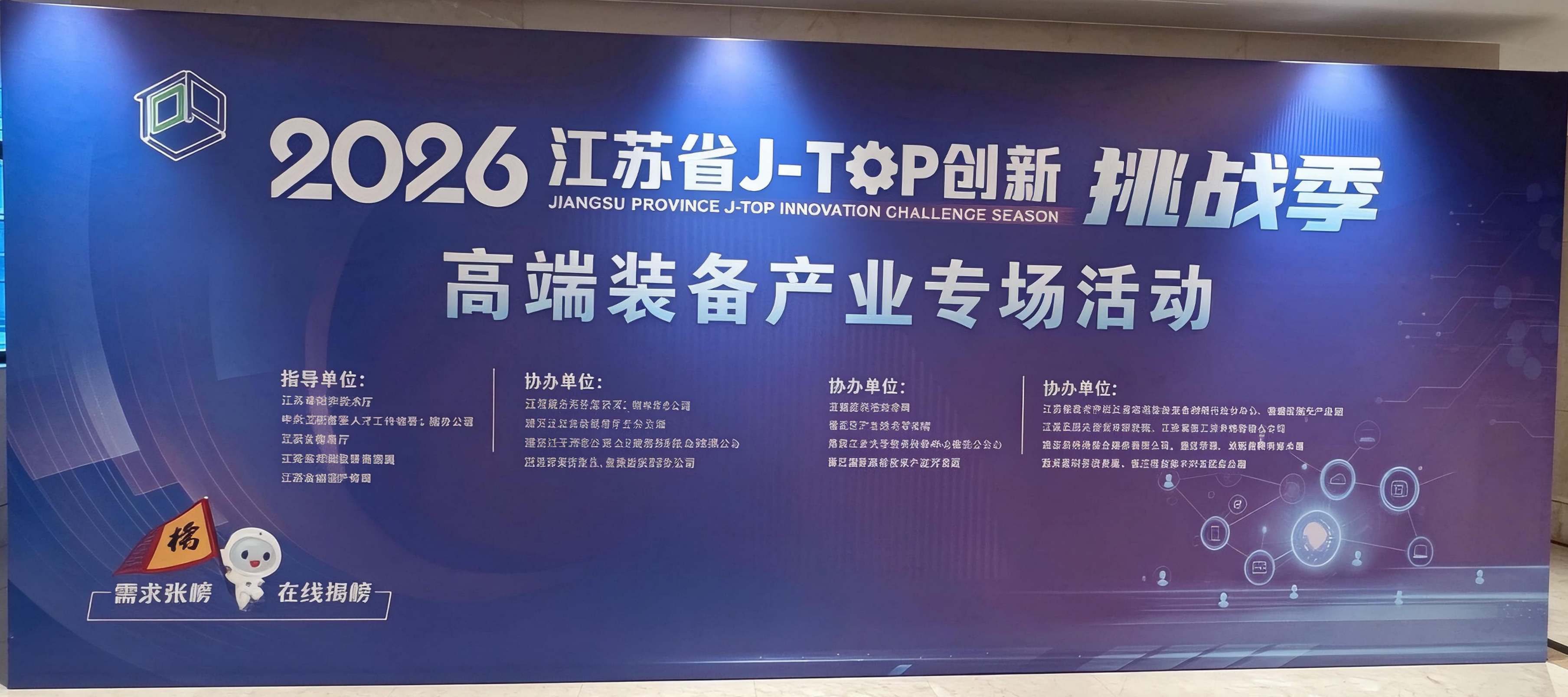
On the afternoon of October 21,2026, at the Chinese Hall on the third floor of the Suqian International Hotel.
The 2026 Jiangsu Province "J-TOP Innovation Challenge Season" High-End Equipment Industry Special Event is currently taking place here. On stage, signing representatives take their seats one by one, sign agreements, and shake hands; below the stage, representatives from universities and research institutions both within and outside the province, technology transfer organizations, and high-end equipment enterprises in Suqian jointly witness the event.
Among the projects included in this batch of centralized signing agreements, one holds particular significance for Jiangsu Sunzo Flexible Technology Co., Ltd.: Dr. Li Yongde of the company and Dr. Qin Nan of Qingdao University of Science and Technology jointly signed an industry–university–research cooperation agreement.
For Sunzo, this is by no means a mere "perfunctory" ceremony; rather, it marks another instance in which an enterprise that has applied flexible components to high-end operating conditions—including nuclear power, aerospace, hydrogen energy, and ultra-high voltage—has invited the "most capable" talent from universities to its own "question-setting" arena.

The "J-TOP Innovation Challenge Season" is a flagship activity for the commercialization of scientific and technological achievements that Jiangsu Province has actively developed. Guided by market demand, it establishes a platform for connecting innovation resources among universities and research institutions with those of enterprises. This special session focused on the high-end equipment industry aims to facilitate targeted matchmaking between universities, research institutes, and innovation teams from within and outside the province, and high-end equipment enterprises in Suqian; address the pain points and challenges facing industrial development; and establish a full-chain mechanism in which "enterprises pose the problems, capable parties solve them, and the market provides the answers."
For the three parties involved, "formulating the challenge" and "solving it" represent precisely the two ends of this agreement.
On one side lies the genuine needs of enterprises: high-end elastic components must withstand fatigue, exhibit creep resistance, and tolerate high temperatures; they must be "reliable" under the most demanding operating conditions—this is the challenge that Sunzo faces every day.
On the other side lies the research capacity of universities: Dr. Qin Nan's team at Qingdao University of Science and Technology has long been deeply engaged in research on materials and equipment technologies, making them a capable group capable of "breaking through key challenges."
Representing Sunzo on the signing stage was Dr. Li Yongde, a core member of the company's R&D team—graduated from the Institute of Metal Research of the Chinese Academy of Sciences, who has led national-level vertical projects with cumulative funding exceeding 10 million yuan and spearheaded enterprise-level key projects, achieving an annual additional output value of over 100 million yuan.
Enterprises pose the questions, universities provide the solutions, and the market delivers the verdict—this collaboration between Sunzo and Qingdao University of Science and Technology serves as the most straightforward illustration of the concept of "industry–academia–research."
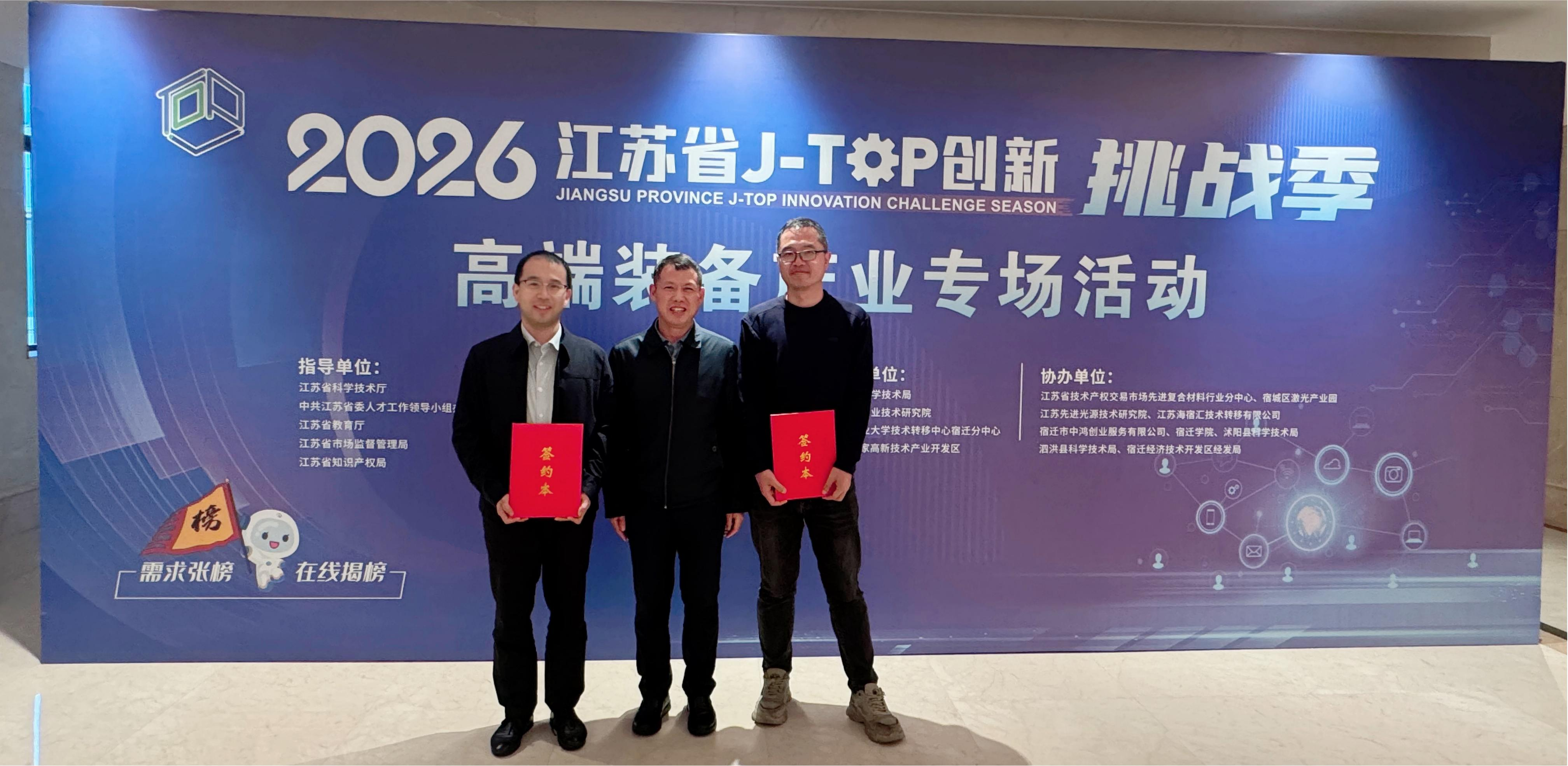

A signing may secure a project, but what provides the underlying support is strength. Why is Sunzo the one standing on this stage?
The answer lies first in Sunzo's underlying technical expertise. From fundamental research on metallic materials to forming, heat treatment, high-pressure processing, and automated sorting, and further to comprehensive testing—including load curves, fatigue cycling, metallographic microstructure, and hydrogen embrittlement—Sunzo possesses end-to-end technical capabilities spanning the entire "materials–forming–heat treatment–testing" chain. While others see a disc spring, Sunzo sees a complete set of predictable deformation boundaries.
The answer also lies in the high level of sophistication of Sunzo's products. In applications such as nuclear power pre-tensioning, aviation flight, hydrogen energy storage and transportation, and ultra-high-voltage power transmission and transformation, Sunzo's disc springs, wavy springs, and special-shaped elastic components serve as indispensable "critical joints" in the entire equipment system. Although these joints are small, a failure in them can have serious consequences.
The answer lies also in the industry voice held by the three groups. By participating in the development and revision of ISO disc spring standards and national standards, and by obtaining management system certifications such as ISO 9001, IATF 16949, ISO 14001, and ISO 45001, an enterprise that begins contributing to the formulation of standards ceases to be merely a market follower and instead becomes one of the industry's definers.

For many enterprises, school–enterprise cooperation often remains at the stage of "signing an agreement and taking a photo together." Sunzo, however, prefers to regard the signing of an agreement as the beginning of a relationship.
The value of industry–academia–research collaboration has never been merely about "borrowing a reputation." Papers published in a laboratory only truly achieve commercialization once they are incorporated into an industrial production line and translated into improved product yields; likewise, university research teams can only transition from being "capable experts" to becoming "collaborators" once they enter the workshop and gain a genuine understanding of operating conditions.
What Sunzo is doing is precisely enabling scientific research and industry to pose questions to each other and answer one another: engineering challenges from enterprises are handed over to research teams for decomposition, while the research achievements of universities are entrusted to Sunzo's production lines for validation. "From product supplier to technology partner" —this is the commitment Sunzo makes to its partners, and it is also its answer to the high-end equipment industry chain: although flexible components may be small, the reliability of high-end equipment depends on the meticulous attention paid to this small component.
While the signing ceremony has come to an end, the dialogue between scientific research and industry has only just begun.
Jiangsu Sunzo has consistently focused on integrating talent, equipment, standards, and manufacturing processes, dedicating many years to the seemingly simple goal of "producing high-end elastic components."
We believe that the journey of high-end equipment is a long one, and that Sunzo is willing to serve as the most reliable link in that journey—
Let every collaboration between the university and industry translate into a tangible product yield on the production line; let every elastic component withstand the most demanding operating conditions.
When they next take the stage for a signing event, Sunzo will bring even greater confidence.


